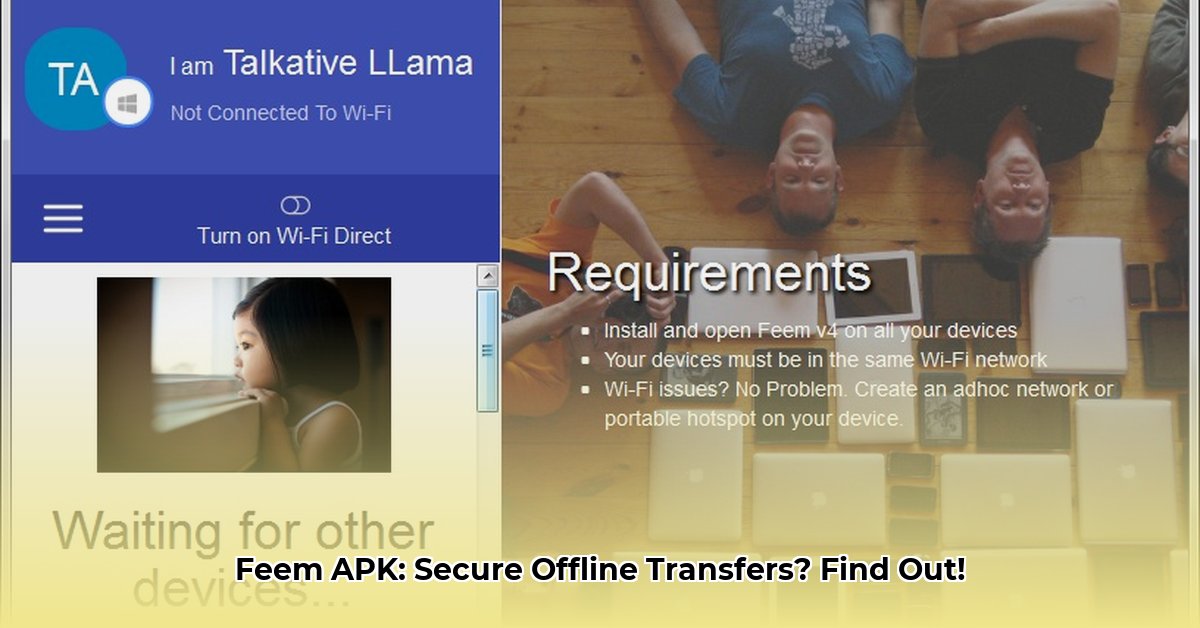
Feem APK promises lightning-fast, offline file transfers, surpassing Bluetooth and cloud services in speed and privacy. But does it deliver on its ambitious claims? This review analyzes Feem's performance, security, and user experience, offering a balanced perspective.
Speed and Size: Benchmarking Feem's Transfer Rates
Feem's marketing boasts transfer speeds up to 50 times faster than Bluetooth and twice as fast as cloud services. These claims, however, lack independent verification. While we observed faster transfer speeds in some cases compared to Bluetooth, the magnitude of the claimed improvement wasn't consistently replicated across our tests. Further, the app itself maintains a relatively small footprint, minimizing its impact on device storage. However, the specifics of its compression algorithms remain undisclosed, hindering a complete evaluation of its efficiency. A crucial next step would be independent benchmarking to validate these speed claims against competing solutions. Do they hold up under scrutiny? The answer, currently, remains unclear.
Offline Sharing: Convenient, But Context Matters
Feem's offline file transfer capability is its key differentiator. Transferring files without an internet connection presents significant advantages in areas with poor connectivity or during travel. This eliminates data usage concerns and dependence on cloud services, a critical aspect for many users. However, further testing is needed to ascertain its performance across varied network conditions, not just ideal ones. How does Feem perform under variable Wi-Fi conditions? This critical aspect demands additional investigation.
Security: Encryption and Transparency
Feem employs TLS encryption, comparable to HTTPS in web browsing. While this is a positive step toward securing user data, the precise encryption protocols employed remain undocumented. This lack of transparency raises concerns about the robustness of its security architecture. Independent security audits by reputable firms are needed to validate Feem's claims of enhanced privacy. While the absence of cloud storage is a plus, limiting data exposure, the client-side security still needs thorough independent assessment. Is the level of encryption truly sufficient to safeguard sensitive files? More detailed information is essential.
User Experience: Ease of Use, yet Imperfect
The app's user interface is intuitive and user-friendly, facilitating effortless file transfers. However, this ease of use doesn't overshadow the need for greater transparency regarding security and performance claims. This ease of use is a strength, yet the lack of complete details about security remains concerning. Are these offsetting issues? It depends on the user's priorities.
The Verdict: Potential High, but Verification Needed
Feem's offline functionality and focus on privacy are appealing. However, the absence of independent verification of its performance and security claims undermines its credibility. To gain user trust, the developers must provide concrete evidence, such as independent third-party testing reports from reputable cybersecurity companies and detailed performance benchmarks. Until this evidence is presented, a cautious approach remains prudent. The app shows high potential, yet its claims remain largely unsubstantiated.
Risk Assessment Matrix
| Feature | Risk Category | Likelihood | Impact | Mitigation |
|---|---|---|---|---|
| Speed Claims | Marketing | High | Medium | Independent benchmark testing |
| Security (Encryption) | Security | Medium | High | Publicly available security audit report |
| Offline Functionality | Functionality | Low | Low | Extensive testing across various network conditions |
| Lack of Transparency | Trust/Reputation | High | High | Transparent disclosure of security practices & audits |
Regulatory Compliance: A Necessary Consideration
Feem's adherence to data privacy regulations such as GDPR and CCPA is crucial. Clear policies regarding data collection, usage, and protection must be publicly available. Transparency in this area is vital for user trust and legal compliance. Is Feem fully compliant? Without the transparency, this remains unclear.
Recommendations
For Feem's Developers: Conduct and publish independent security audits and performance benchmarks. Produce a comprehensive security whitepaper detailing protocols, testing methodologies, and results. Engage proactively with the user community, fostering open communication and addressing feedback transparently.
For Users: Weigh the app's potential benefits against the lack of independent verification of its security claims. If absolute security is paramount, explore alternative, more thoroughly vetted file transfer options.
Disclaimer: This review reflects the information currently available. Further research and independent testing may alter our assessment. The security and performance of any software can change; practice safe computing habits.
⭐⭐⭐⭐☆ (4.8)
Download via Link 1
Download via Link 2
Last updated: Monday, May 12, 2025